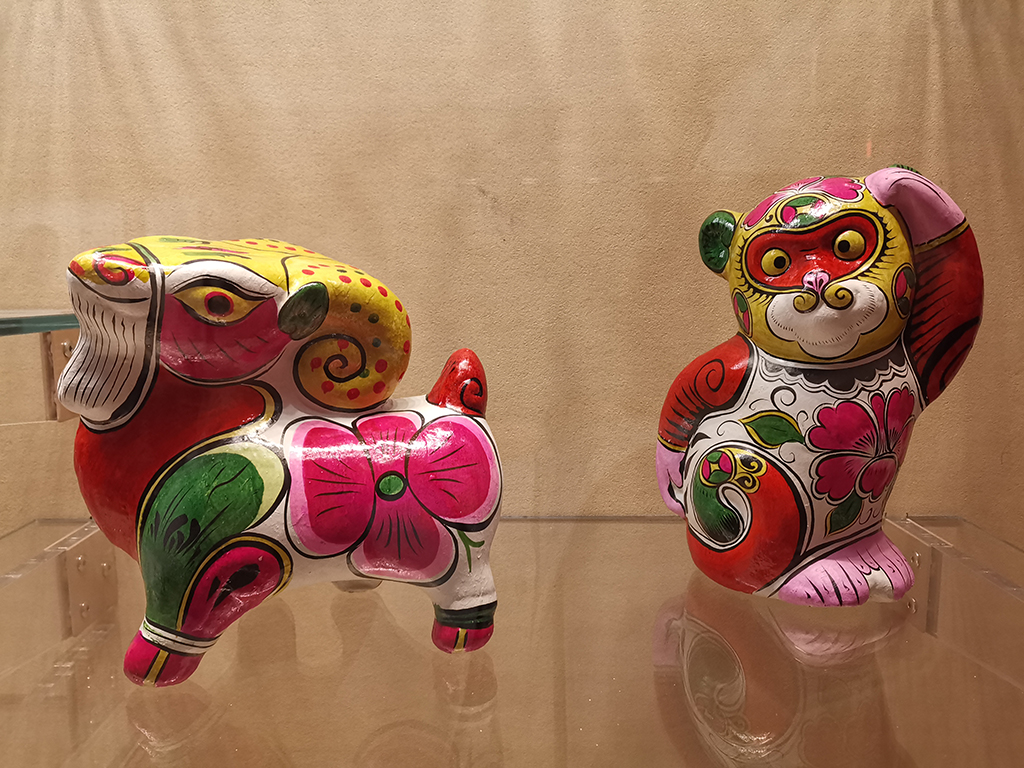
Fengxiang Painted Clay Sculpture
Introduction
Fengxiang painted clay sculpture is a distinctive form of traditional Chinese folk art that originates from Fengxiang county in Baoji city, Shaanxi province, China. Known for its vibrant colors and exaggerated features, these sculptures are a vivid representation of local culture and heritage. The art form primarily features figures of animals, deities, and folklore characters, often imbued with symbolic meanings. The sculptures are crafted using locally sourced clay and are meticulously painted to achieve their striking appearance. This art is recognized as a national intangible cultural heritage, reflecting its cultural importance and unique artistic style.
History
The history of Fengxiang painted clay sculpture is deeply rooted in the cultural and artistic traditions of Shaanxi province. The craft dates back centuries, with its origins tracing to local customs and religious practices. Historically, these sculptures were used in rituals and festivals, often serving as offerings to deities or as decorations. Over time, the craft evolved, with artisans incorporating more vibrant colors and detailed patterns into their work. The use of bright colors like red, yellow, and green became a signature feature, symbolizing prosperity and happiness. In 2013, the art form gained recognition when Wei Zhaozhong, a prominent artisan, was named a representative inheritor of this intangible cultural heritage.
Characteristics
Fengxiang painted clay sculptures are characterized by their bold and vibrant use of color, which is applied in layers to create a rich, textured appearance. The figures often exhibit exaggerated features, such as large eyes and expressive faces, which contribute to their whimsical charm. These sculptures typically depict animals, especially those from the Chinese zodiac, as well as mythological figures and deities. The art form is known for its strong folk style, which is both lively and humorous. The use of locally sourced clay allows for detailed modeling, and the figures are often finished with a glossy lacquer to enhance their visual appeal.
Techniques
The creation of Fengxiang painted clay sculptures involves a series of intricate techniques that artisans have honed over generations. The process begins with the selection of high-quality clay, which is then shaped and molded into the desired form. Artisans use their hands and simple tools to model the figures, ensuring that each piece is unique in its expression and detail.
Materials Used
The primary material used in Fengxiang painted clay sculpture is locally sourced clay, known for its pliability and fine texture. This clay is ideal for detailed work, allowing artisans to create intricate designs and elaborate forms. Once shaped, the clay figures are left to dry before being painted. Natural pigments are traditionally used to color the sculptures, although modern artisans may incorporate synthetic paints for added vibrancy and durability.
Painting Methods
The painting process is a crucial aspect of creating Fengxiang painted clay sculptures. Artisans use a palette of bright colors applied in layers to achieve depth and richness. The painting often involves intricate patterns and motifs, adding to the sculpture's ornamental quality. Fine brushes are used for precision, and the figures are frequently adorned with traditional patterns such as floral designs and geometric shapes. This meticulous attention to detail is what gives Fengxiang painted clay sculptures their distinctiveness and charm.
Cultural Significance
Fengxiang painted clay sculptures are more than just artistic expressions; they hold deep cultural significance. These sculptures are closely tied to local traditions and beliefs, often used in festivals and rituals to symbolize good fortune, health, and prosperity. The depiction of zodiac animals and deities reflects the ancient Chinese practice of imbuing art with symbolic meanings. Furthermore, the art form is a testament to the region's rich cultural heritage, preserving the history and folklore of Shaanxi province. The recognition of Fengxiang painted clay sculpture as a national intangible cultural heritage highlights its importance as a cultural asset.
Modern Influence and Adaptation
In recent years, Fengxiang painted clay sculpture has seen a resurgence in popularity, driven by modern adaptations and influences. Artisans are increasingly experimenting with new materials and techniques, incorporating contemporary themes and elements into their work. This fusion of traditional and modern styles has broadened the appeal of Fengxiang painted clay sculptures, attracting interest from collectors and art enthusiasts worldwide. Moreover, the art form has found a place in modern interior design and fashion, with designers incorporating its vibrant aesthetics into various products. Such adaptations demonstrate the flexibility and enduring appeal of Fengxiang painted clay sculpture in a contemporary context.








